



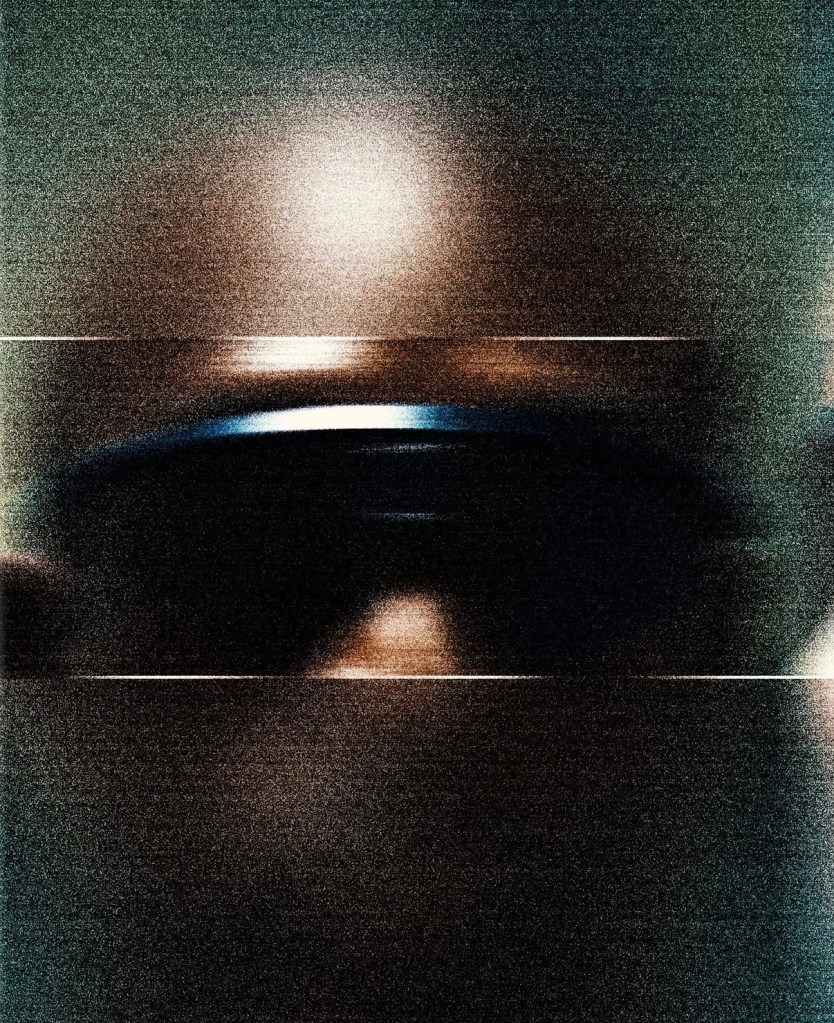
In the fall of 2024, Mads Faith Hancock walked into Bandit Running’s Bleecker Street store in New York carrying a tote bag filled with sunglasses. He had spent nearly 18 months developing the eyewear, experimenting with materials, testing prototypes, and refining designs. What began as a conversation about manufacturing and performance would eventually develop into one of Research Studio’s most important partnerships.
Founded in 2024, Research Studio is an independent performance eyewear company operating between New York and Copenhagen. Its founder, Hancock, had already spent more than 15 years working across eyewear and technical products, with experience in design, manufacturing, and distribution. After relocating to New York, he began developing the idea for a company that could approach performance eyewear differently. He believed the industry had become too dependent on conventional production methods, excessive branding, and products that prioritized appearance without sufficiently reconsidering their construction.
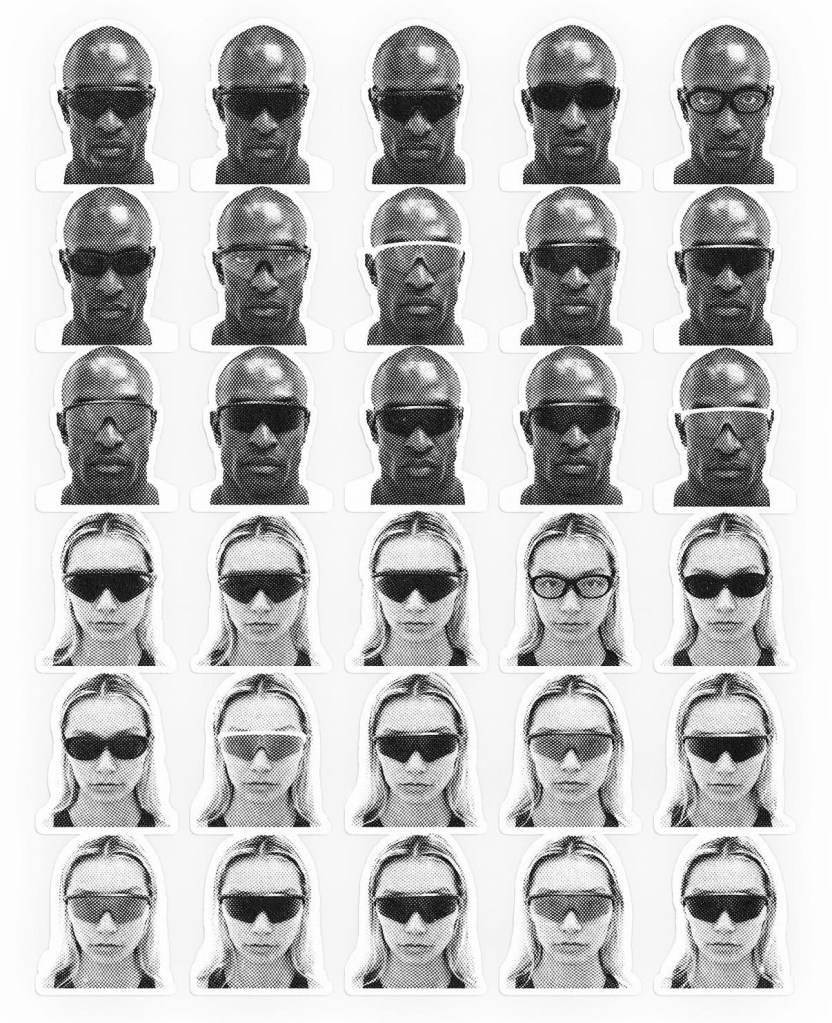
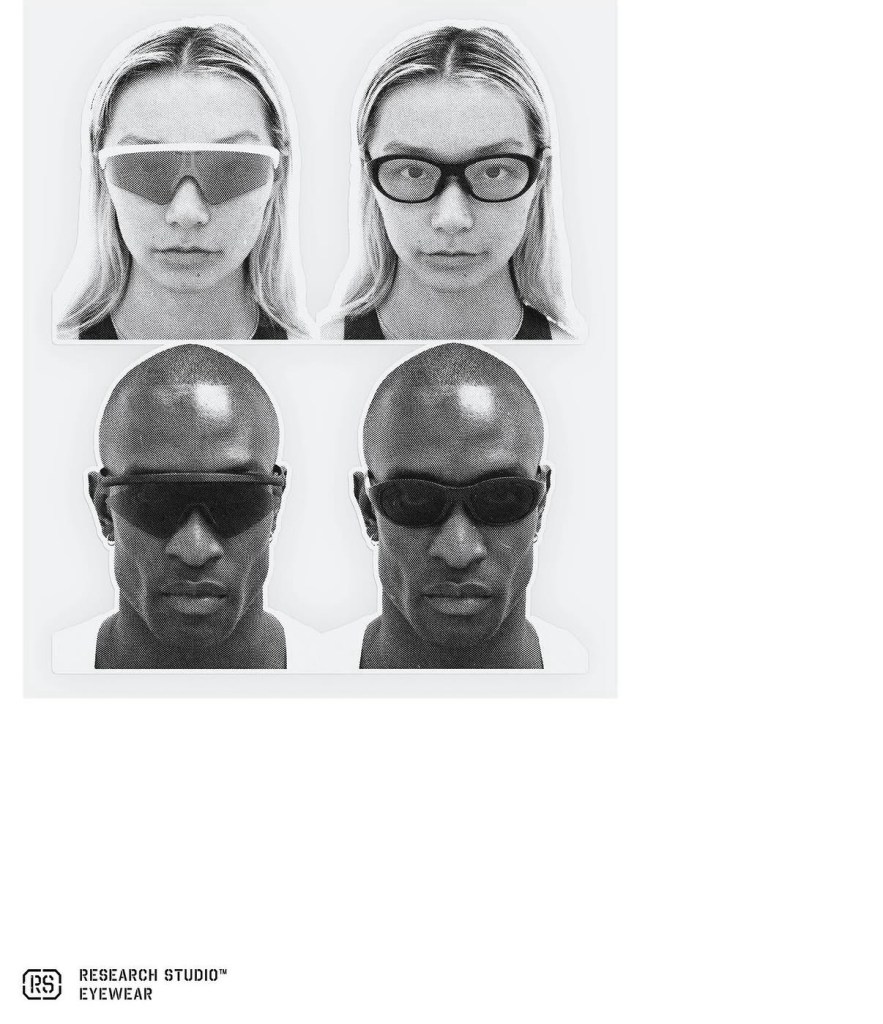
Hancock wanted Research Studio to begin with the product itself. Rather than introducing a large collection, he spent approximately a year and a half developing the company’s first two silhouettes, SHADOW and UNCUT. The process involved sketching, digital modeling, prototyping, testing with athletes, and making repeated adjustments to fit, stability, ventilation, and weight. Each component needed a functional purpose. Even the decision to avoid large logos was intentional. Hancock wanted the frames to be recognizable through their construction and silhouette rather than their branding.
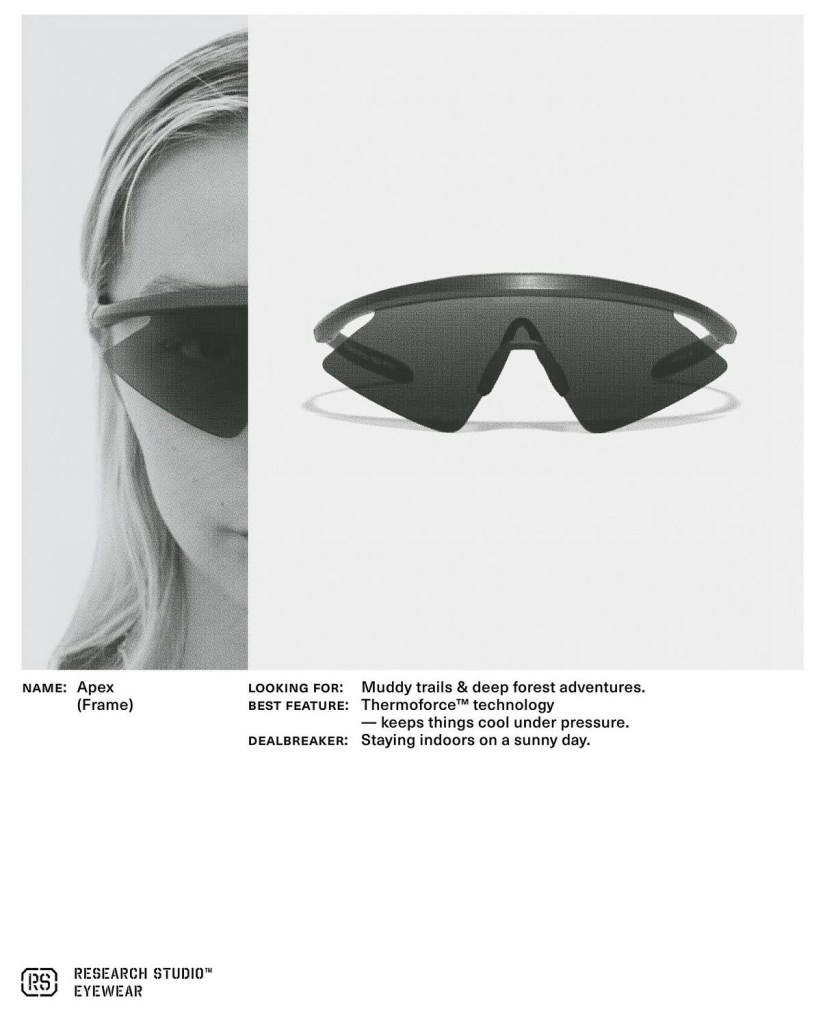
One of the more unusual influences behind Research Studio’s design language comes from dragonflies. Hancock studied their anatomy, particularly their ability to move with precision, maintain balance, and navigate their surroundings. The insect’s shape helped inform the curved temples, wraparound lenses, and ventilation systems found throughout the collection. Openings around the brow and nose encourage airflow to reduce fogging, while flexible temples and carefully considered frame geometry are designed to keep the glasses secure during movement. The goal was to produce eyewear that remained comfortable throughout a run without requiring constant adjustment.
The manufacturing process became another defining part of the company. Instead of using conventional injection molding, Research Studio produces its frames in the United States through Selective Laser Sintering, an industrial 3D printing process that uses lasers to fuse powdered nylon into solid objects. The frames are made from lightweight, durable polyamide materials, allowing the company to develop complex shapes without relying on traditional production molds. This approach also makes it easier to adjust designs and produce smaller quantities.
For Hancock, changing the manufacturing process was also a way to address the environmental impact of eyewear production. Research Studio operates with a small batch approach that reduces the need for large inventories. Hancock has explained that if the company needs only 24 units, it can manufacture that quantity rather than ordering hundreds or thousands of additional frames. The company also works to reuse excess manufacturing material and keeps production and warehousing together to reduce unnecessary transportation. Research Studio describes this as a zero waste approach and participates in LifeGate’s Zero Impact initiative, although its broader environmental claims have not been independently established through a published lifecycle assessment.
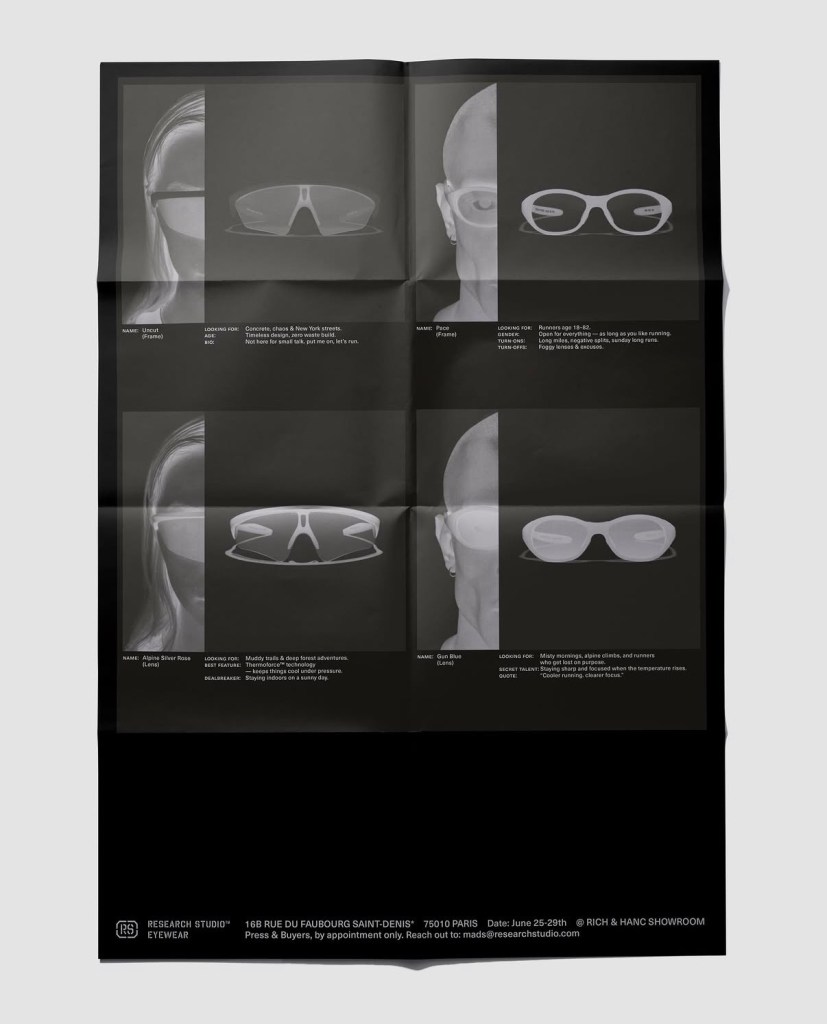
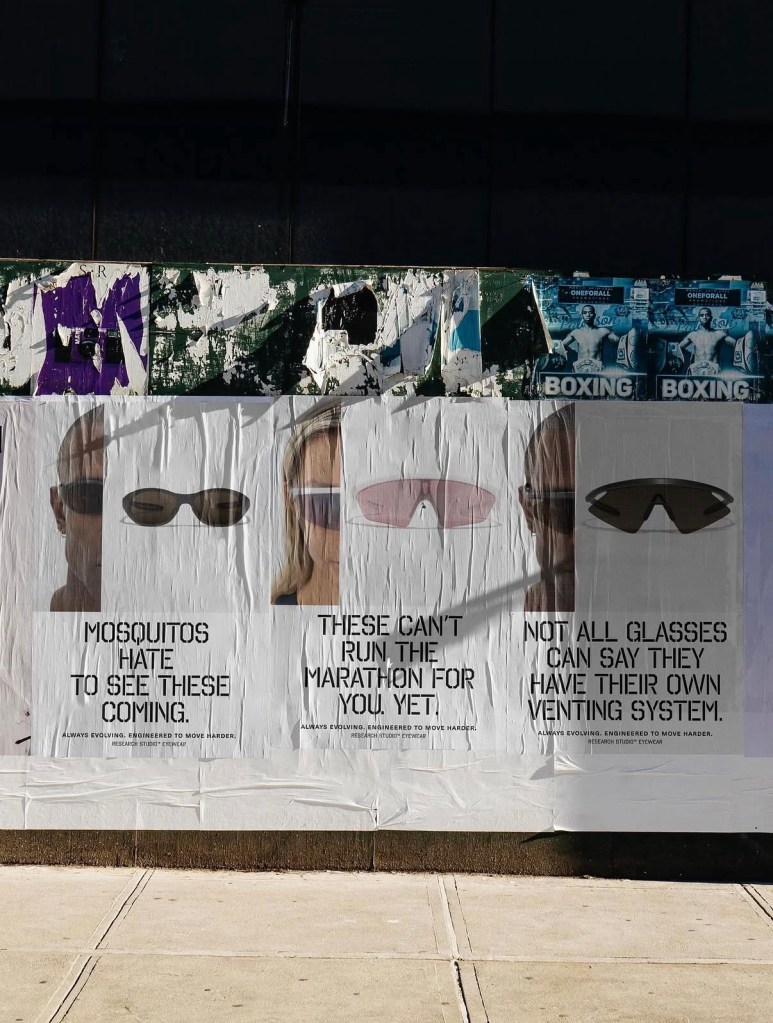
The lenses are equally important to the design. Research Studio works with German optical manufacturer ZEISS, using specialized lens technologies developed for demanding outdoor conditions. Its ThermoForce technology is designed to reduce infrared radiation and heat buildup behind the lenses, while TriPel coatings help repel sweat, water, oil, and dirt. Combined with wide fields of vision and lightweight frames, the eyewear is developed for runners moving between changing light, temperatures, and environments. The collection has gradually expanded beyond SHADOW and UNCUT to include PACE, APEX, and SCOPE, each exploring different proportions and approaches to coverage while maintaining the same technical foundation.
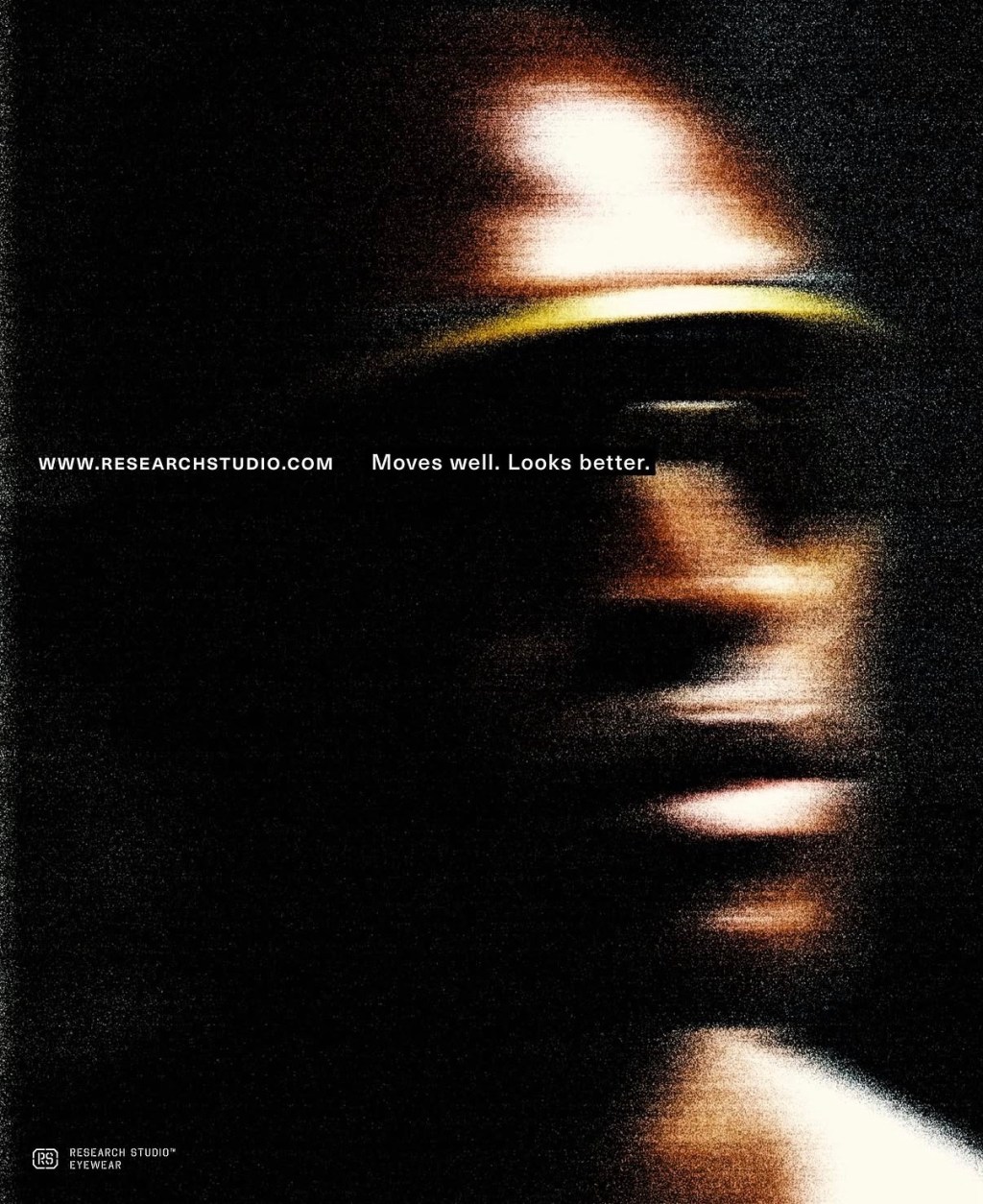
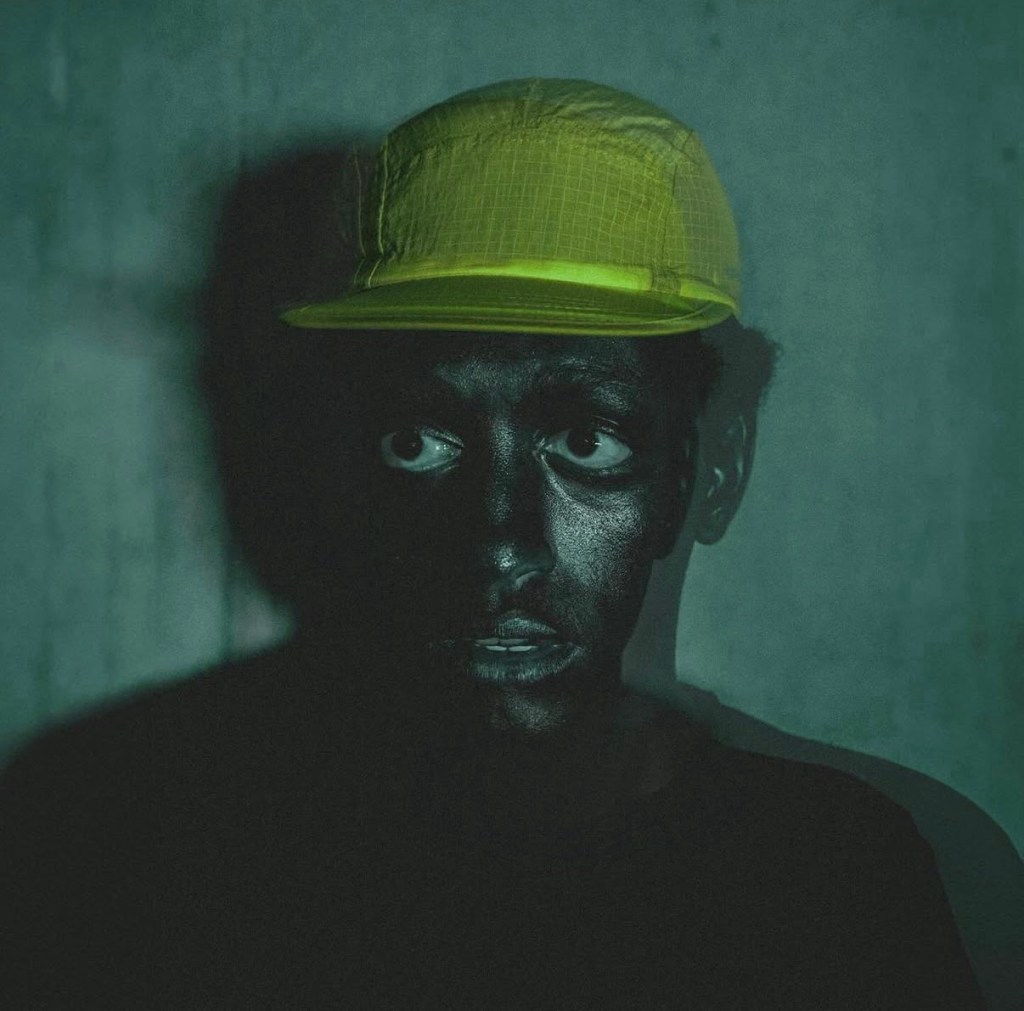
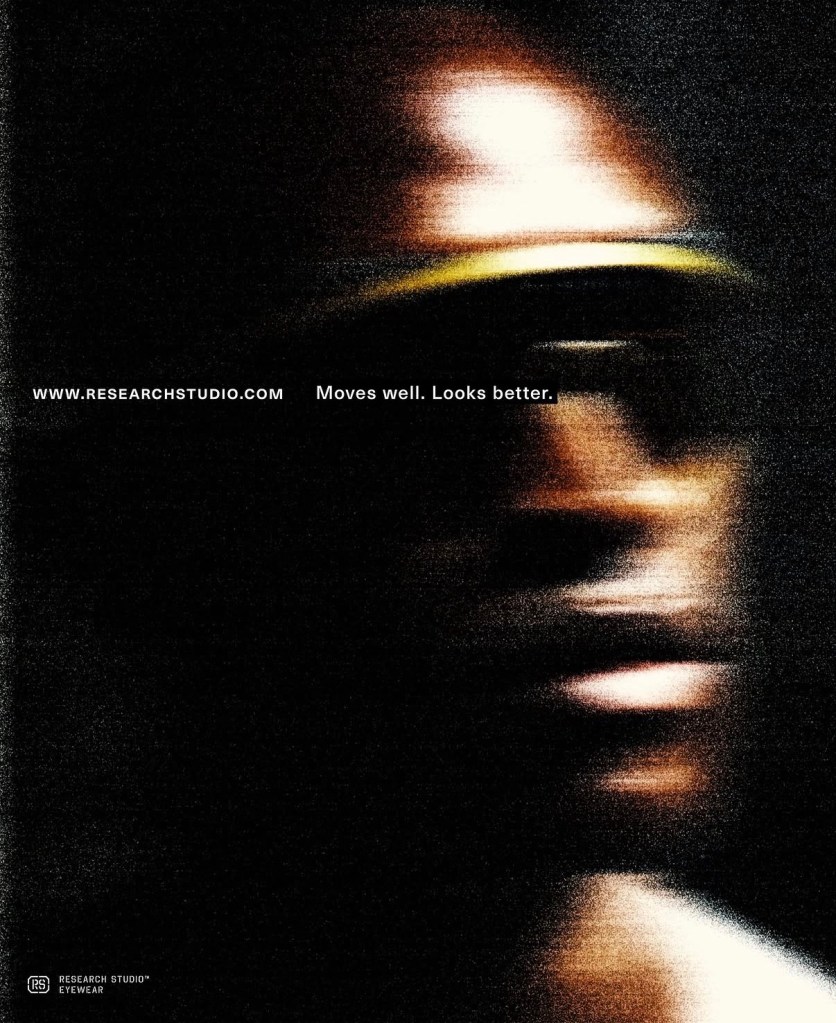
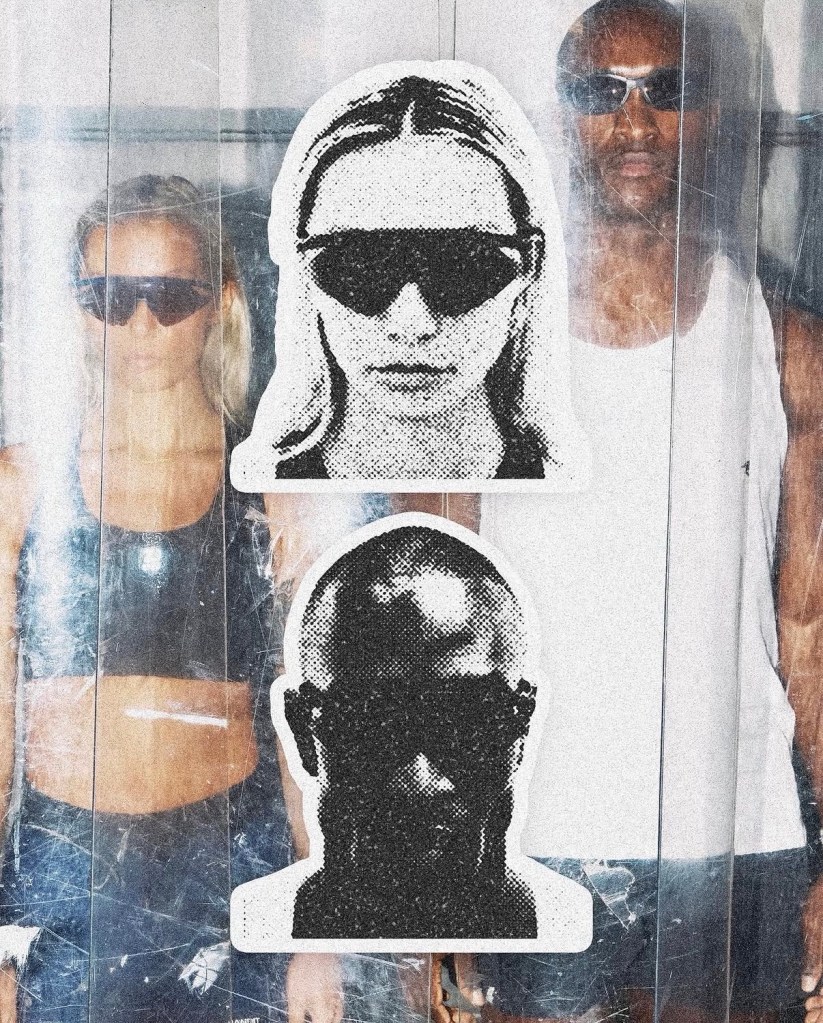
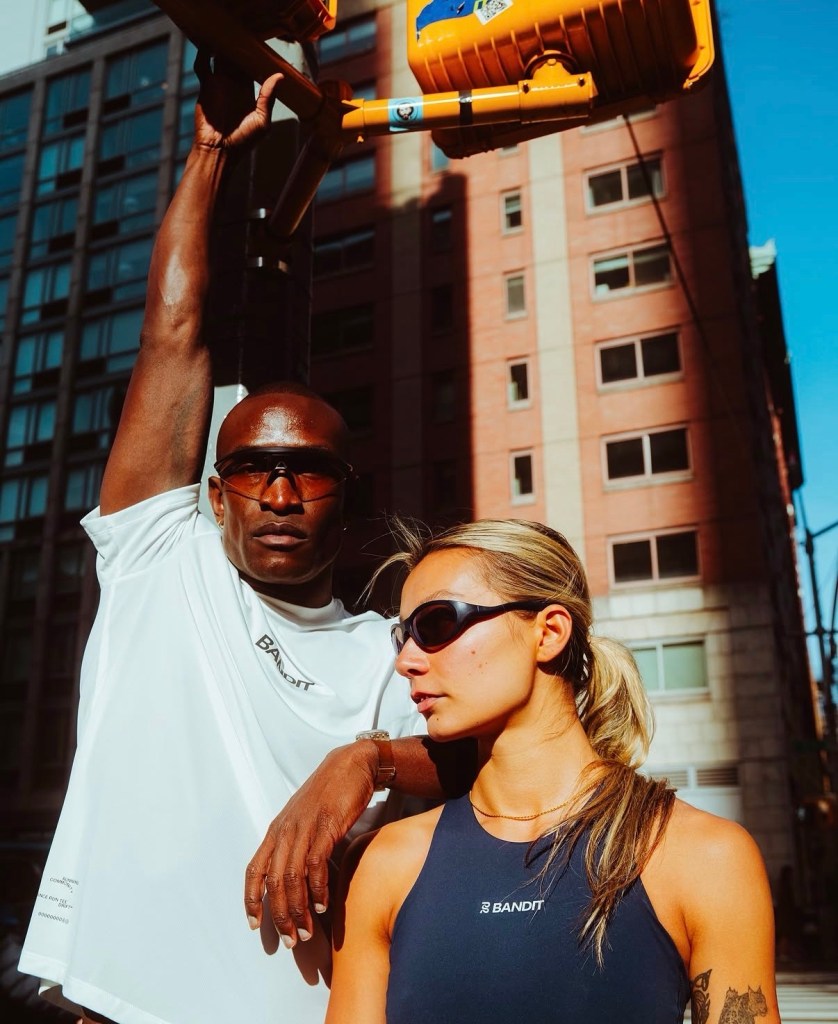
Despite its emphasis on engineering, Research Studio has developed an identity that reaches beyond competitive running. Its visual direction is restrained, and its campaigns often resemble contemporary fashion editorials more than traditional athletic advertising. One of its early campaigns, “Tested by New Yorkers. Also Great for Running,” featured people whose daily routines required them to remain active for long periods. Rather than casting professional runners, Research Studio photographed everyday New Yorkers, including a florist, construction worker, chess player, and finance worker. Hancock wanted to demonstrate that the glasses could function throughout ordinary daily life as well as during training.
That approach helped establish Research Studio within the growing relationship between running and contemporary fashion. Designer Salehe Bembury was among the early visible wearers of the brand, drawing attention to its unfamiliar silhouettes. The eyewear began appearing in spaces where technical sportswear, personal style, and running culture increasingly overlapped. Its minimal branding made the products feel less restricted to a specific athletic identity, allowing them to be worn with running equipment or everyday clothing without appearing out of place.
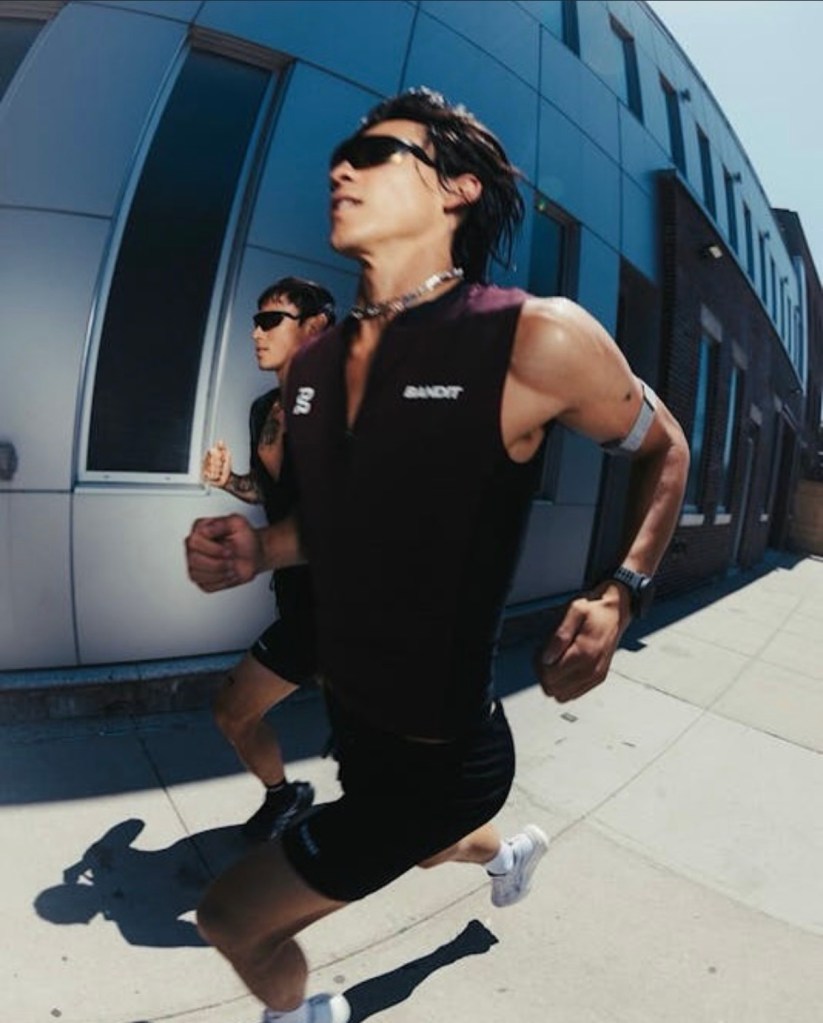
Its relationship with Bandit Running became a significant part of that development. After Hancock’s initial visit to Bandit’s New York store in 2024, the two companies began working toward a collaborative release. Their first collection arrived in Fall 2025, introducing exclusive variations of Research Studio’s PACE and UNCUT silhouettes. The partnership brought together Research Studio’s technical manufacturing expertise and Bandit’s established presence within running culture. Hancock was already a customer and admirer of Bandit, making the relationship a natural extension of how he understood performance and personal style.
The collaboration continued into June 2026, when the companies introduced two entirely new silhouettes, STRIDE and FOAM. Unlike their first project, which adapted existing frames, the second collaboration involved developing new designs together. Working with Bandit’s creative team, including designer Ardith, Hancock moved through sketches, computer modeling, prototypes, manufacturing reviews, and repeated fit testing. STRIDE developed into a slimmer semi-rim performance frame that built upon the fit of Research Studio’s PACE model. FOAM took a different direction, incorporating a larger vintage-inspired shape intended to function both during running and throughout everyday life. The process also introduced new colors, lens combinations, and perforated temple details inspired by the breathability of Bandit’s apparel.
The partnership demonstrated how Research Studio could expand its visual language without abandoning its original priorities. Some ideas were removed during development because they introduced unnecessary weight, durability concerns, or additional complexity. The finished designs reflected a shared interest in creating products that could contribute to a runner’s personal style without compromising their intended function.
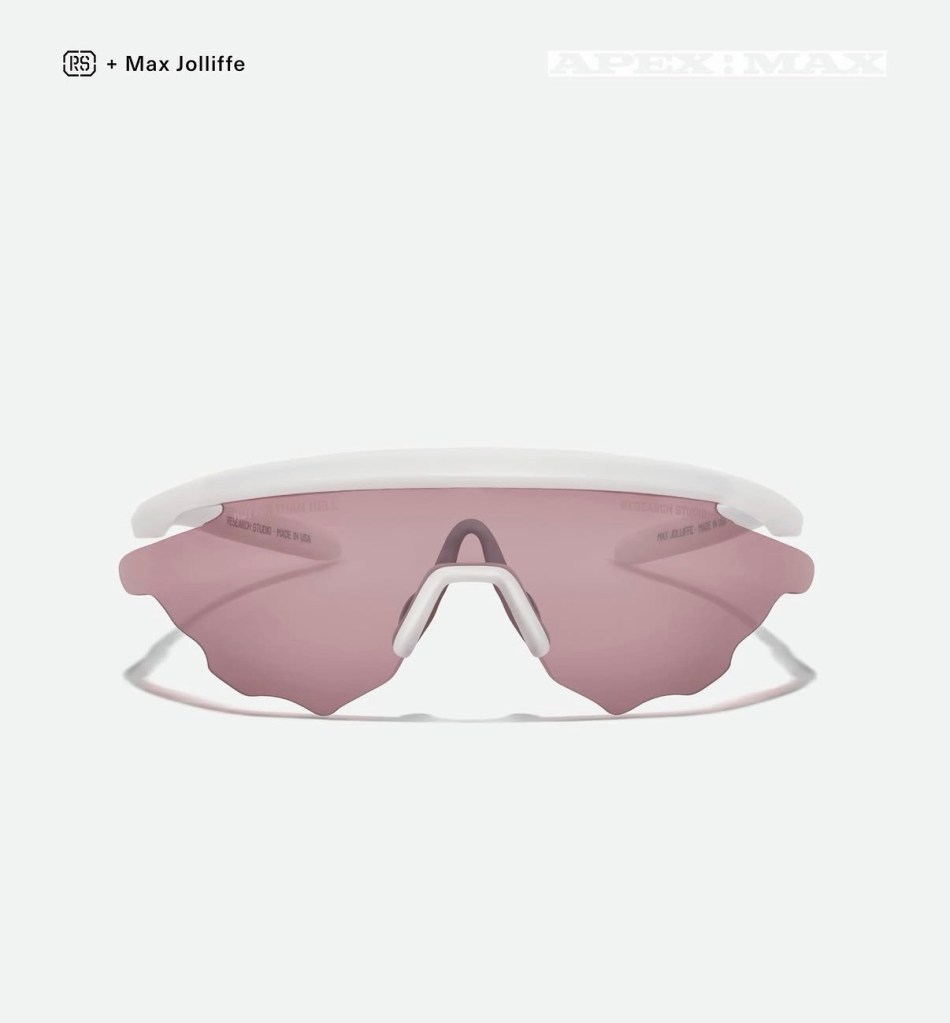
Another important development came through Research Studio’s work with ultrarunner Max Jolliffe. In 2026, the company collaborated with Jolliffe on APEX:MAX, a specialized version of its APEX silhouette developed for the Badwater 135 ultramarathon. The race covers 135 miles through Death Valley and the surrounding desert, exposing athletes to some of the most demanding conditions in endurance running. Research Studio worked with Jolliffe to develop an exclusive ZEISS shield lens inspired by the mountain ridgelines and natural contours of the landscape. Each lens was individually cut, laser engraved with the words “HOTTER THAN HELL,” and assembled in the United States.
The project focused particularly on heat management, coverage, and comfort over prolonged periods of activity. Weighing approximately 26 grams, APEX:MAX incorporated Research Studio’s ThermoForce lens technology and existing 3D printed frame construction. Jolliffe went on to win the 2026 Badwater 135 in 20 hours, 53 minutes, and 41 seconds, establishing a new men’s course record while wearing the collaboration’s eyewear. For Research Studio, the achievement connected its product development directly with one of endurance running’s most demanding competitive environments.
As the company has developed, Hancock has remained selective about expansion. Rather than immediately pursuing widespread distribution, Research Studio established relationships with retailers and communities that understood its approach to design and performance. These have included KA_YO Kitchen in Stockholm, RICH & HANC in Copenhagen, and Bandit Running in the United States. Its connections between New York, Copenhagen, American manufacturing, and German optical technology have also given the company an international identity from an early stage.
Research Studio’s development reflects a wider shift in how runners relate to the equipment they wear. Running products are no longer confined to race day or training sessions, and consumers increasingly expect performance, design, and everyday versatility to exist within the same product. Research Studio has approached that relationship through manufacturing and engineering first, allowing its technical identity to inform the way the glasses look and the culture surrounding them.
What began with two silhouettes and 18 months of development has grown into a collection of performance eyewear, collaborations with one of running’s most recognizable independent apparel brands, and equipment used during a record setting ultramarathon. For Hancock, the underlying idea remains consistent. Research Studio was created to reconsider how running eyewear could be designed, produced, and experienced. Its progress so far suggests that technical equipment can have a distinct cultural identity without losing sight of the activity it was originally built for.
More information: researchstudio.com