How a competition launched in Hamburg with just 650 participants became a global sporting phenomenon, a multimillion-dollar business, and one of the newest disciplines pursuing a place at the Olympic Games.






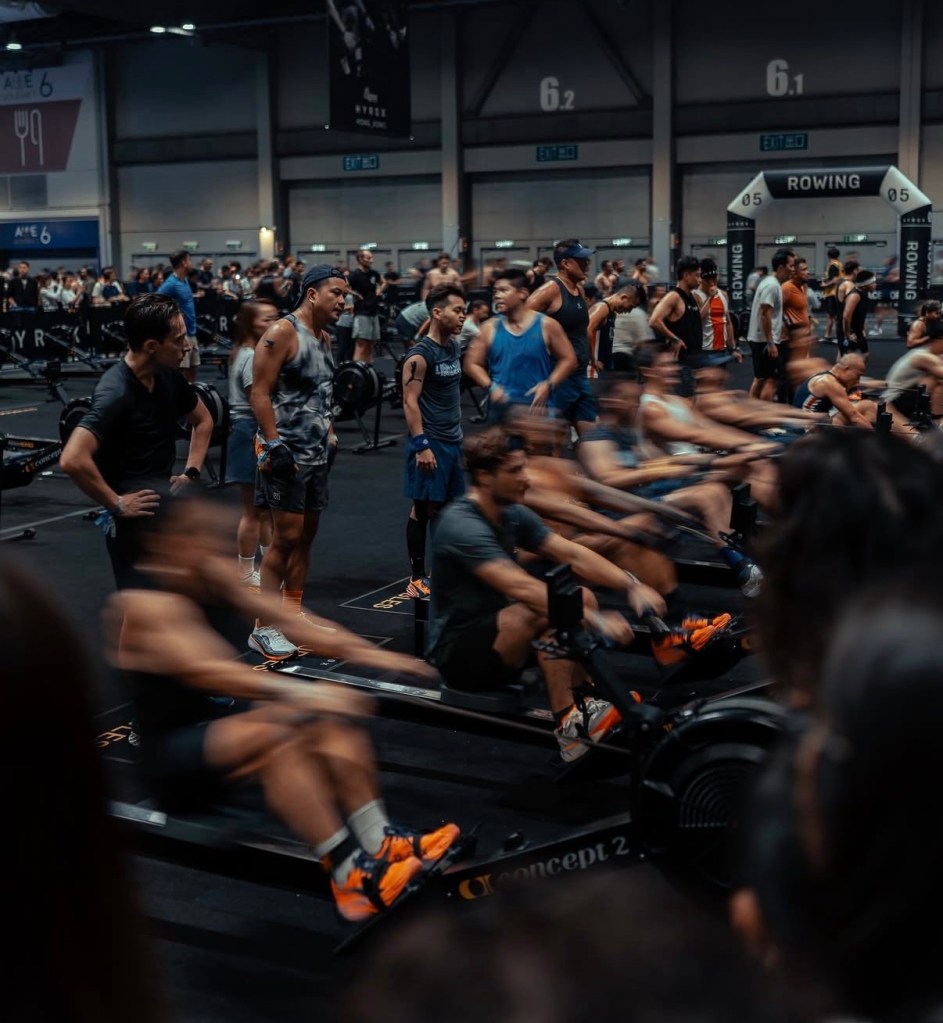

In 2017, approximately 650 people gathered inside an exhibition hall in Hamburg, Germany, to participate in an unfamiliar fitness competition. The event combined running with functional exercises, moving athletes between sled pushes, rowing machines, weighted carries, and other physical challenges. There were no decades of sporting tradition behind it, no established professional circuit, and little indication that the experiment would eventually become a global phenomenon.
Nine years later, that competition, known as HYROX, has grown into one of the most recognizable names in competitive fitness.
During its 2025 and 2026 season, HYROX organized more than 100 events, attracting over 1.4 million participants and 1.5 million spectators worldwide. Its races now take place across major international cities, supported by affiliated gyms, dedicated training programs, professional athletes, global sponsors, and an increasingly influential community.
The transformation has been remarkable. But perhaps the clearest indication of how far HYROX has come arrived on October 28, 2026, when the organization announced a landmark partnership with World Triathlon, formally establishing Hybrid Racing as a recognized discipline within the federation’s sporting structure.
For the first time, the competition has a defined institutional pathway toward international multisport competitions and the long-term ambition of Olympic and Paralympic inclusion.
To understand why that announcement matters, it is necessary to understand what HYROX originally set out to create.
THE IDEA THAT STARTED EVERYTHING
HYROX emerged from a relatively simple observation about modern fitness culture. Millions of people around the world trained in gyms, developing strength, endurance, and overall physical conditioning. Yet unlike runners, cyclists, swimmers, or triathletes, many had no widely established competition through which to measure those abilities against others.
A recreational runner could enter a 10K or marathon. A cyclist could compete in races or organized challenges. Triathletes had established distances, international events, and recognized championships.
For people whose primary sport was simply going to the gym, the competitive landscape was less clearly defined.
German sports entrepreneur Christian Toetzke recognized that opportunity. With extensive experience organizing mass-participation events in cycling and triathlon, Toetzke understood the appeal of competitions that gave ordinary athletes a specific goal to work toward.
He joined forces with Moritz Fürste, a former German field hockey player who won Olympic gold medals in 2008 and 2012, alongside communications and marketing specialist Michael Trautmann, who was involved in developing the concept.
Fürste understood the perspective of a professional athlete, while Toetzke brought experience in building large sporting events. Together, they envisioned a competition that combined the accessibility of recreational fitness with the structure, atmosphere, and recognition of organized sport.
The physical design of the race was developed by Mintra Tilly, who began working with Toetzke on the concept around 2015.
Tilly experimented with combinations of running and functional movements, testing exercises, distances, and weights to determine what would create a demanding competition without excluding the majority of recreational gym-goers.
The design process involved considerable trial and error. Movements such as monkey bars and box jumps were considered but eventually removed because of concerns about accessibility, safety, and the difficulty of judging large numbers of participants consistently.
The objective was not to create the most technically complex fitness competition possible. It was to develop something challenging enough for highly trained athletes but understandable and achievable for a much broader audience.
The team initially planned to stage its first event outdoors. Scheduling complications forced the organizers to move the competition into an exhibition hall, a decision that would become central to the identity of HYROX.
The indoor environment offered controlled conditions, room for large crowds, clearly defined workout stations, and the possibility of organizing events during colder months.
In 2017, the first HYROX competition took place in Hamburg.
Approximately 650 athletes participated. It was a modest beginning, but the organizers had created something that could be repeated, measured, and expanded.
EIGHT KILOMETERS. EIGHT WORKOUTS. ONE FINISH TIME.
Part of HYROX’s success comes from the simplicity of its format.
Every standard HYROX race follows the same structure: a one-kilometer run followed by a functional workout station, repeated eight times. By the finish, participants have completed eight kilometers of running and eight different exercises.
The workout stations are performed in a fixed order: SkiErg, sled push, sled pull, burpee broad jumps, rowing, farmers carry, sandbag lunges, and wall balls.
The running distance and station sequence remain consistent around the world, while certain weights and competition requirements vary according to the athlete’s division.
Unlike competitions where the workout changes from one event to another, HYROX athletes know exactly what they are preparing for.
That consistency gives the sport one of its defining characteristics. Someone competing in London can compare their performance with an athlete racing in New York, Sydney, or Berlin. Improvements can be tracked, personal records established, and performances ranked within divisions and age groups.
The comparison is not perfectly identical in every venue, since transitions and course configurations can differ, but the standardized structure provides a common competitive framework.
HYROX also offers several ways to participate. Athletes can race individually in Open or Pro divisions, compete alongside a partner in Doubles, or share the workload with teammates in a Relay.
There is no qualifying requirement for ordinary race entry and no general finishing-time limit. According to the organization, more than 98 percent of participants complete their races.
This structure gives recreational athletes an experience similar to that of professional competitors. They enter a sporting venue, receive an official result, compete under defined rules, and cross a finish line surrounded by other athletes and spectators.
The distinction is important.
HYROX does not simply offer people another way to work out. It provides a competitive purpose for the training they are already doing.
FROM HAMBURG TO THE REST OF THE WORLD
Following its debut, HYROX began expanding beyond Germany.
An early event in Miami Beach in 2018 introduced the concept to the American market, while further competitions helped establish its presence across Europe.
Growth was gradual during the early years. The organizers continued developing the race format, attracting sponsors, and introducing more people to a sporting concept that was still unfamiliar outside functional-fitness communities.
In December 2019, sports marketing company Infront invested in HYROX, bringing additional resources and international event experience to the business.
The COVID-19 pandemic subsequently interrupted in-person competitions, temporarily slowing its expansion. However, as restrictions eased and mass-participation events returned, HYROX entered a period of rapid growth.
In October 2022, Infront became the company’s majority owner, helping finance its expansion into additional markets.
During the 2022 and 2023 season, HYROX recorded more than 90,000 participants. That figure would increase dramatically over the following years as competitions expanded throughout Europe, North America, Asia, and other regions.
By 2026, HYROX had moved far beyond the scale of its original ambition.
Events were selling out rapidly, cities were adding additional race days to accommodate demand, and gyms were increasingly incorporating HYROX-specific programming into their schedules.
One particularly revealing example is Dallas.
For November 18 through 22, 2026, HYROX has scheduled five consecutive days of racing in the city, citing the strength of the Texas market and growing demand from competitors.
What started as a one-day experiment in Hamburg has become an event capable of taking over major exhibition spaces for entire weekends and, increasingly, multiple days.
Its expansion has also reached Asia, where fitness racing is attracting significant interest in markets including China and India.
In China, HYROX has become part of a broader movement connecting exercise, lifestyle, social experiences, and organized competition. New domestic and international fitness-racing formats are also emerging, demonstrating how quickly the category is developing beyond any single company.
HYROX may have helped popularize the contemporary format, but it is no longer the only organization attempting to define the future of competitive fitness.
THE RISE OF THE EVERYDAY ATHLETE
There is a cultural dimension to the growth of HYROX that cannot be explained by its race format alone.
For decades, traditional gym culture largely revolved around individual goals. People trained to become stronger, improve their appearance, lose weight, or maintain their health. Progress was often measured privately through lifting numbers, body composition, or personal fitness milestones.
HYROX introduced another possibility.
Instead of working toward an undefined idea of being fitter, participants could prepare for a specific event. Training became organized around a date, a measurable result, and a clear physical challenge.
The competition also created a new social environment around fitness.
Friends began training together, couples entered Doubles competitions, gyms formed racing communities, and athletes traveled to other cities to compete.
An activity previously experienced largely through everyday gym routines became something people could share through race weekends, community workouts, and organized training groups.
For many participants, the attraction extends beyond the competition itself. HYROX provides a reason to maintain a routine, a community of people pursuing similar goals, and opportunities to test themselves in a public setting.
That sense of belonging has become one of the strongest elements of the brand.
HYROX has supported the development of affiliated training clubs, allowing gyms to offer dedicated programming while connecting their members to the wider competition network.
The relationship benefits both sides. Gyms gain an additional way to attract and retain members, while HYROX develops a community of athletes who spend months preparing for races.
It also changes how people identify themselves.
Someone who once described their exercise routine simply as going to the gym may now consider themselves a HYROX athlete.
That shift from fitness activity to sporting identity is one of the most important developments in the organization’s history.
The race might last an hour or two. The preparation can become part of someone’s everyday life.
THE PROFESSIONALIZATION OF FITNESS RACING
As participation increased, the standard of elite competition rose alongside it.
HYROX established professional divisions, international rankings, elite competitions, and World Championships, creating opportunities for athletes to specialize in the combination of running and functional strength.
The sport began attracting competitors from endurance running, functional fitness, CrossFit, and other athletic backgrounds.
Its demands require an unusual balance of abilities. Athletes need enough aerobic capacity to sustain repeated running efforts, sufficient strength to complete demanding weighted exercises, and the ability to transition efficiently between very different physical movements.
Success requires more than simply being a strong runner or an accomplished weightlifter.
By 2026, the professional side of HYROX was becoming increasingly sophisticated.
At the World Championships in Stockholm in June, American athletes Dylan Scott and Alyssa McElheny won the elite men’s and women’s individual titles, respectively, demonstrating the growing international depth of the competition.
The emergence of athletes capable of specializing in HYROX has also attracted more attention from major sporting brands, creating sponsorship and professional opportunities that did not exist when the competition began.
For the 2026 and 2027 season, HYROX introduced a revised elite qualification system based on points accumulated across a rolling 365-day period.
Rather than relying exclusively on individual performances, the new structure places greater emphasis on consistent results against strong competitive fields.
The development is significant because it introduces another feature associated with established professional sports: an organized pathway through which athletes can progress toward the highest level of competition.
Meanwhile, ordinary participants can still pursue age-group qualification for the World Championships, with the 2027 edition scheduled to take place in Hong Kong.
Two competitive identities now exist within the same organization.
One is designed around recreational athletes challenging themselves. The other is becoming a professional sporting environment where careers, sponsorships, and international titles are increasingly important.
Maintaining both has become central to HYROX’s future.
THE BUSINESS BEHIND THE MOVEMENT
The commercial growth of HYROX has been almost as remarkable as its sporting development.
Beyond entry fees, the company has developed a business ecosystem encompassing merchandise, sponsorships, licensed training facilities, educational programs, and event partnerships.
Its standardized competition model allows HYROX to enter new markets while maintaining a recognizable product. Unlike a sporting event dependent on a particular stadium or landscape, its races can be organized within large indoor venues using a repeatable arrangement of running areas and workout stations.
That scalability has helped attract investors.
In September 2026, a consortium led by investment firm L Catterton, working alongside HYROX founders Christian Toetzke and Moritz Fürste, acquired Infront’s majority stake in the company.
The transaction returned majority ownership to the founders while introducing new financial partners, including WndrCo.
Although the financial terms were not publicly disclosed, reports placed the company’s valuation at approximately €600 million.
The deal reflects the extraordinary commercial position HYROX has reached in less than a decade.
But it also introduces new expectations.
A company operating at this scale must continually expand participation, maintain the quality of its events, strengthen its commercial partnerships, and respond to an increasingly competitive marketplace.
The growing popularity of fitness racing has encouraged other businesses to develop competing formats.
Established organizations and newer entrants are experimenting with different combinations of endurance, strength, team competition, and spectator entertainment.
This emerging market presents HYROX with an important challenge.
Creating a category is one achievement. Remaining its dominant organization as that category expands is another.
THE QUESTION OF ACCESSIBILITY
One of HYROX’s most appealing characteristics has always been its promise that recreational athletes can participate.
Unlike professional sporting leagues, ordinary competitors do not need to be selected by a team or qualify for the regular competition format.
But accessibility is more complicated than simply allowing anyone to enter.
Racing involves registration fees, travel, equipment, and the time required to prepare. Athletes who want to train in specialized facilities may also pay for coaching, gym memberships, or HYROX-specific classes.
For some participants, the associated costs are manageable. For others, they represent a meaningful barrier.
As the competition grows more fashionable and commercially successful, these differences may become increasingly visible.
There is also the question of athletic expectations.
HYROX was designed to accommodate a broad range of fitness levels, but its rising popularity has created an environment where personal records, rankings, race photographs, and professional-looking training routines are highly visible.
The same competitive structure that gives people motivation can also create pressure to perform.
A participant who initially entered to experience something new may eventually feel an obligation to become faster, train more frequently, or compete at increasingly demanding levels.
These tensions are not exclusive to HYROX. Similar developments have occurred in running, cycling, and triathlon as participation has become connected to lifestyle, identity, and consumer culture.
The challenge for HYROX is finding a way to maintain the openness that helped establish its audience without allowing the commercial and competitive sides of the organization to overshadow it.
OCTOBER 2026: A NEW CHAPTER BEGINS
On October 28, 2026, HYROX announced its most significant institutional development to date.
The organization had signed a strategic term sheet with World Triathlon, the international federation responsible for triathlon and a range of related multisport disciplines.
The partnership establishes Hybrid Racing as a recognized discipline within World Triathlon’s sporting structure, creating an official framework for international competition and future development.
The announcement represents a meaningful change in how HYROX fits into the wider sporting world.
For most of its history, HYROX developed primarily as a privately operated fitness competition. It established its own rules, organized its own championships, and built its international reputation through participation and commercial growth.
The partnership places Hybrid Racing within an established international federation structure.
Under the agreement, World Triathlon will sanction and govern three competition formats developed alongside HYROX.
The first, Ultimate, reflects the existing HYROX race format.
The second, Fast, is planned as a shorter, higher-intensity competition.
The third, Ultra, is intended to provide an extended endurance challenge.
Detailed technical specifications for the new formats have not yet been publicly finalized.
HYROX will operate official elite World, Continental, and National Championships in the Ultimate format, while World Triathlon’s national federations will have opportunities to organize competitions and develop the discipline within their respective countries.
The organizations also intend to establish opportunities for Hybrid Racing within international multisport events.
World Triathlon has more than 177 national federation members, providing a substantial existing network through which the discipline could expand.
For HYROX, this is a step beyond organizing popular competitions. It creates a framework through which Hybrid Racing could become a more formally governed international sport.
THE ROAD TO THE OLYMPICS
The long-term ambition behind the partnership is Olympic and Paralympic recognition.
HYROX representatives have previously identified the 2032 and 2036 Olympic Games as potential targets for inclusion, although neither has been approved.
The October agreement does not guarantee a place in any future Olympic program. That decision would require a separate process involving the relevant international sporting authorities and Olympic organizers.
A more detailed agreement between HYROX and World Triathlon is also expected to establish the full operational, commercial, and governance arrangements of their partnership.
Nevertheless, the announcement brings the organization closer to a goal its leadership has discussed for years.
The potential implications extend well beyond HYROX itself.
If Hybrid Racing eventually becomes an Olympic discipline, athletes could gain opportunities to represent their countries in a sport that barely existed a decade ago.
National federations could establish development systems, junior pathways, domestic championships, and high-performance programs.
Professional competitors might eventually pursue international medals through a structure comparable to other established endurance sports.
But Olympic recognition also introduces a different set of pressures.
International competition requires extensive regulation, consistent judging standards, athlete eligibility rules, qualification systems, and sporting governance.
It may also change how the competition is presented to spectators, particularly as organizers attempt to balance the demands of professional competition with the experience of recreational participants.
For an organization that developed its identity around mass participation, that transition will be particularly important.
DOES HYROX NEED THE OLYMPICS?
There is a more fundamental question beneath the announcement.
Does HYROX actually need Olympic recognition to establish itself as a legitimate sport?
It already has international competitions, elite athletes, world champions, standardized rules, a large global community, and increasingly substantial commercial support.
Its growth suggests that people are willing to invest time, money, and energy into Hybrid Racing without the promise of Olympic medals.
An ordinary participant completing their first HYROX race does not become more athletic simply because the competition receives recognition from an international federation.
Likewise, professional competitors have already demonstrated that the format demands extraordinary levels of physical preparation.
Olympic inclusion would bring additional prestige, visibility, and institutional opportunities, but the activity’s legitimacy has also been built through years of participation.
At the same time, formal recognition could offer something commercial growth alone cannot provide.
A more established international sporting structure may create clearer development pathways, broader competitive opportunities, and stronger institutional support for athletes across different countries.
The real question is not simply whether HYROX deserves to be included in the Olympic Games.
It is whether the process of pursuing that recognition can strengthen the sport without diminishing the qualities that made it popular in the first place.
WHAT COMES NEXT?
As 2026 draws toward its conclusion, HYROX occupies an unusual position in the sporting world.
It is simultaneously a participation event, a professional competition, a global fitness community, and a rapidly expanding commercial business.
Its influence can be seen in gyms introducing functional-fitness racing programs, athletes structuring their training around standardized challenges, and sporting companies developing products specifically for hybrid competition.
The World Triathlon partnership suggests that the organization intends to move beyond its current role as a successful event operator and help establish Hybrid Racing as a lasting international sporting discipline.
But the next chapter remains uncertain.
The popularity of fitness trends can change quickly, and the demands of operating a global competitive structure will become more complicated as participation increases.
Competitors will continue entering the market. Athletes will demand greater opportunities. Commercial partners will expect growth. International sporting organizations will require consistency and accountability.
HYROX must manage all of these expectations while remaining appealing to the recreational athlete who simply wants something meaningful to train for.
That may ultimately prove more difficult than expanding into another country or selling out another arena.
When the first HYROX event took place in Hamburg in 2017, the organizers were attempting to answer a relatively straightforward question: what if the millions of people who train in gyms had a standardized competition of their own?
Nine years later, that question has produced an international sporting movement, a valuable global business, and a potential pathway toward the Olympic Games.
HYROX has already demonstrated that people want more than another workout. They want something to prepare for, something to measure themselves against, and something to share with others.
Whether the organization eventually reaches the Olympics remains to be seen.
But its influence on the relationship between fitness, competition, and modern sporting culture is already difficult to ignore.
What began as an experiment in Hamburg has become a serious part of the conversation about what the future of sport might look like.